
At 1st Private Capital, 35 percent down is more than a larger equity contribution. On a qualifying transaction, it can change how we execute the loan.
With 35 percent borrower equity, qualifying 1PC transactions need no appraisal. When title is clear, we close in 2 weeks. That can give an experienced investor the speed and certainty to write a stronger offer and operate more like a cash buyer.
That is why 35 percent matters to us. The investor is not simply reducing debt. The equity position can remove closing friction and help us put more certainty behind the deal.
Real estate investors often describe leverage as the ability to control a property with as little cash as possible. That is financial leverage. It is only one kind of leverage.
An investor who puts 10 percent down may preserve more cash and show a higher projected return on equity when everything goes according to plan. An investor who puts 35 percent down may gain something different: negotiating leverage, closing leverage, construction leverage, and exit leverage.
The real question is not simply, "How little cash can I put into this property?" It is, "Which capital structure gives me the strongest probability of acquiring the property, completing the plan, and realizing the return?"

The 1PC advantage: For qualifying transactions, 35 percent borrower equity can mean no appraisal and support a close in 2 weeks.
Financial leverage and deal leverage are not the same
Putting 10 percent down uses more borrowed money. If the project performs perfectly, that can amplify the return measured against the investor's cash contribution. It can also create a transaction that depends on the lender, valuation, construction budget, timeline, and exit all landing within a narrow range.
Putting 35 percent down reduces the acquisition debt and creates an equity cushion from the beginning. That cushion can affect nearly every stage of the deal.
| Decision point | 35% down | 10% down |
|---|---|---|
| Acquisition debt | Lower | Higher |
| Dependence on financing | Reduced | Greater |
| Appraisal sensitivity | More cushion | Less cushion |
| Carrying cost | Lower loan balance | Higher loan balance |
| Ability to absorb delays | Potentially stronger | More dependent on reserves |
| Cash retained at closing | Less | More |
| Projected return on equity | Potentially lower | Potentially higher |
A simple $500,000 purchase
On a $500,000 acquisition, 35 percent down is $175,000 and leaves a $325,000 acquisition loan. Ten percent down is $50,000 and leaves a $450,000 acquisition loan. The better-capitalized investor contributes $125,000 more cash but begins the project with $125,000 less acquisition debt.
That difference affects interest carry, valuation sensitivity, the size of the required exit, and the amount of pressure created by a delay. It also affects liquidity. The investor contributing $175,000 has less cash available outside the property unless separate reserves were maintained.
Neither column proves that a transaction is good. A poor purchase price remains a poor purchase price. A weak exit remains weak. The comparison shows what each structure asks the investor to trade.
Your down payment is not gone. It changed form.
A down payment is not the same as an interest payment, lender fee, closing cost, or construction expense. It is the investor's capital contribution to the property.
Before closing, that capital appears as liquid cash. At closing, it becomes equity. At a successful sale or refinance, the equity can be released back to the investor after the debt and transaction obligations are satisfied.
- Cash before closing: The investor controls liquid funds.
- Equity after closing: The cash is transferred into the ownership position.
- Capital during the project: The equity supports the acquisition and provides a cushion beneath the debt.
- Proceeds at the exit: A successful sale or refinance can return the invested capital, plus any profit remaining after loan payoff and costs.
That is the real liquidity trade. The investor is temporarily less liquid because the money is working inside the property. The money has not been paid away as a borrowing cost.
Equity is still capital at risk. A lower sale price, failed project, cost overrun, extended hold, or foreclosure can reduce or eliminate it. The accurate statement is not that every dollar is guaranteed to return. It is that the down payment becomes part of the investor's ownership position and can return through a successful exit.
Capital flow: Cash becomes property equity. Property equity becomes sale or refinance proceeds. Those proceeds return capital and, when the deal performs, profit.
Thirty-five percent down changes the offer you can write
When an exceptional property comes to market, the seller is not only comparing purchase prices. The seller is also comparing the probability that each buyer will close.
A strong offer combines three things:
- Price: What the buyer is willing to pay.
- Speed: How quickly the buyer can close.
- Certainty: How few unresolved conditions stand between the contract and the closing table.
The National Association of Realtors notes that sellers may prefer quicker closing timelines and simpler transactions. Redfin's analysis of competitive offers found that all-cash offers and waived financing contingencies improved buyers' odds of winning in its 2021 transaction data.
No appraisal can mean no appraisal contingency

Appraisal timelines can introduce another party, another appointment, another report, and another condition into the closing process. On a time-sensitive acquisition, that delay can weaken the offer before underwriting is complete.
At 1st Private Capital, qualifying transactions with 35 percent borrower equity need no appraisal. These transactions are our wheelhouse. We evaluate the property, purchase price, equity, and exit without waiting for the appraisal process.
That gives an experienced investor the ability to consider an offer without a lender-required appraisal contingency. When the investor is satisfied with the property and prepared to perform, the same financing confidence may allow the investor to consider removing the financing contingency as well.
1PC closing capability: We close qualifying transactions in 2 weeks, assuming there are no title issues that delay closing.
Financing can make a no-contingency offer possible. It does not make waiving contingencies risk-free. Inspection, title, environmental, zoning, and property-condition protections are separate decisions. Experienced investors should evaluate those risks with the appropriate real estate and legal professionals before removing contractual protections.
Certainty can create negotiating power
The highest written price is not necessarily the strongest economic offer to the seller. A higher offer tied to a long financing period, appraisal approval, and several opportunities to cancel may be less attractive than a cleaner offer with a firm closing date.
An investor who can close quickly may be able to negotiate:
- A better purchase price
- An as-is purchase
- Fewer seller repairs or credits
- A closing date that solves the seller's timing problem
- More favorable access or possession terms
- Priority over a higher but less certain offer
None of those outcomes is guaranteed. The negotiating advantage comes from giving the seller something valuable: confidence that the signed contract will become a completed sale.
Equity gives the project room to move
The acquisition is only the first stage. Renovation projects encounter change orders, contractor delays, material increases, permit problems, insurance expenses, interest carry, and conditions that were not visible before demolition.
A thinly capitalized project can become dependent on every reimbursement and draw arriving at exactly the right moment. Contractors still need to be paid. Materials still need to be ordered. Interest continues to accrue while the property is unfinished.
An investor with meaningful equity and adequate reserves is better positioned to:
- Cover an unexpected repair
- Keep contractors working through a temporary delay
- Carry the property longer than projected
- Adjust the scope without stopping the project
- Reduce the resale price if market conditions change
- Change the exit instead of becoming a forced seller
Rehab financing is not the problem. Fragile capitalization is.
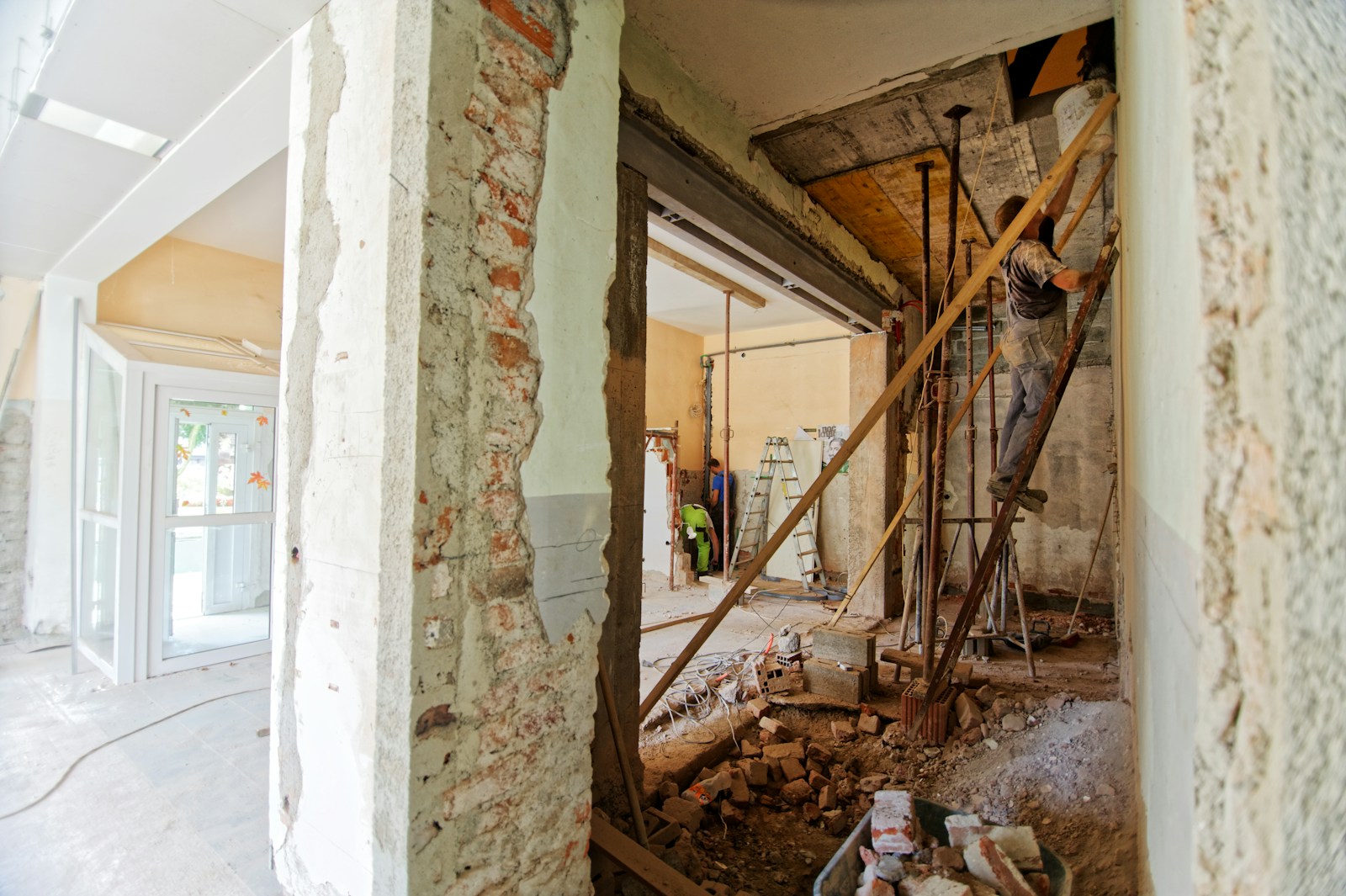
Borrowing construction funds can be a reasonable strategy. Draw inspections, milestone controls, and structured reimbursements can add discipline to a project.
The risk grows when multiple forms of leverage are stacked together:
- Minimal acquisition equity
- Most or all rehab costs financed
- No meaningful contingency reserve
- An aggressive after-repair value
- A short maturity
- An exit that requires perfect timing
That capital stack may look efficient when the budget and schedule remain intact. It becomes fragile when a wall is opened, a contractor misses a deadline, or the resale market softens.
Federal Reserve guidance describes borrower equity as both an economic commitment and a margin that protects against overruns, incomplete construction, and failed projects. The principle is straightforward: a project needs enough committed capital to reach completion when the original assumptions change.
The real standard: Meaningful equity should be paired with adequate reserves. Putting 35 percent down and exhausting every remaining dollar can still leave the project undercapitalized.
Completed projects help stabilize their markets
A completed renovation returns usable property to the market. It can improve housing quality, support neighboring values, create contractor work, and move an underused asset toward occupancy.
An unfinished project can do the opposite. When an undercapitalized investor cannot complete the work, the property may remain vacant, exposed, or poorly maintained while the debt and carrying costs continue to grow.
HUD research connects vacant and abandoned properties with reduced neighboring property values, public-safety concerns, and increased municipal costs. HUD's Neighborhood Stabilization Program was designed to acquire and rehabilitate foreclosed or abandoned properties to reduce blight and return them to productive use.
That does not mean every 10-percent-down buyer destabilizes a neighborhood or every 35-percent-down buyer completes the work. It means well-capitalized projects have more capacity to absorb setbacks and reach the result the property and neighborhood need: completion.
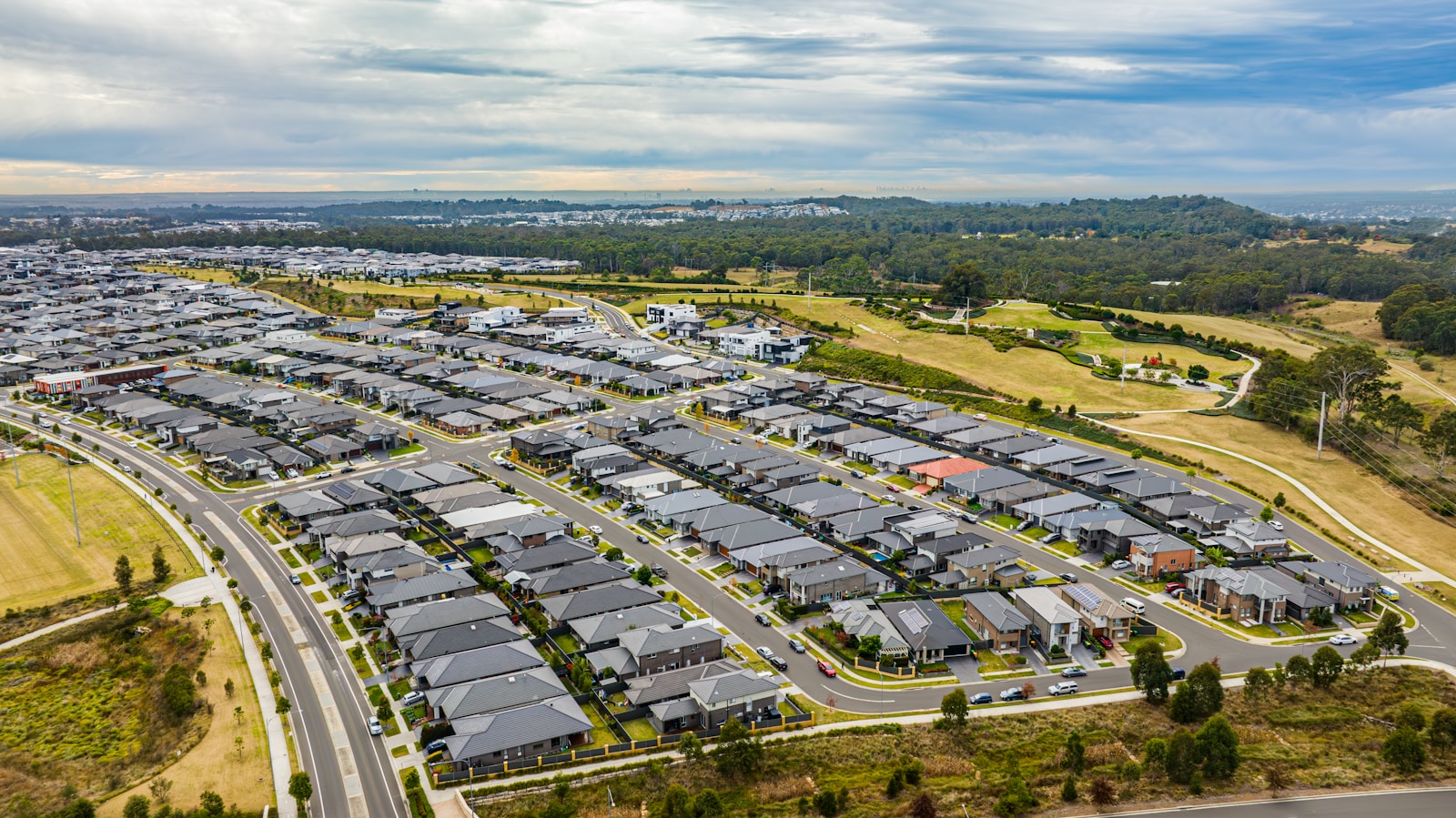
More equity creates exit leverage
High financial leverage can improve returns when the sale, refinance, and timeline all perform as expected. It can also allow the debt structure to control the exit.
With a larger equity position, an investor may have more ability to:
- Refinance at a conservative completed value
- Accept a lower sale price without losing the entire position
- Hold the property while waiting for a stronger market
- Change from a sale to a rental strategy
- Contribute additional capital without immediately exceeding the project's value
- Avoid a forced sale caused by a narrow maturity or repayment plan
Research has repeatedly connected higher loan-to-value ratios and thinner equity cushions with greater default sensitivity, particularly when property values fall. Most of that research concerns conventional residential mortgages rather than private business-purpose bridge loans, but the risk mechanism remains relevant: less equity leaves less room between the debt and the asset's value.
When 10 percent down can still make sense
Ten percent down is not automatically irresponsible. An experienced investor may use higher leverage while maintaining substantial liquidity, conservative assumptions, reliable contractors, and multiple exits.
A 10-percent-down investor with significant reserves may be better capitalized than a 35-percent-down investor who has nothing left after closing. Experience, basis, property condition, liquidity, debt structure, and exit planning all matter.
The honest tradeoff is:
- Ten percent down: More liquidity and potentially higher projected return on equity, with greater dependence on financing and execution.
- Thirty-five percent down: Less liquidity during the deal, with lower acquisition debt and potentially more control over the offer, project, and exit.
The goal is not the smallest down payment. It is the completed deal.
Seasoned investors understand that a closing is not the finish line. The return is only realized when the business plan is completed and the capital comes back.
Putting 35 percent down can make an investor less liquid for the life of the transaction. It also transfers that cash into property equity, reduces the debt burden, and can create the certainty needed to win the acquisition. For qualifying 1st Private Capital transactions, it can mean no appraisal and support a close in 2 weeks.
The strongest capital structure is not necessarily the one that uses the least cash. It is the one that gives the investor enough speed to acquire the opportunity and enough resilience to carry it through the exit.
Have a qualifying purchase or refinance? Send us the property, purchase price or value, requested loan amount, and location. Request a Term Sheet.
Sources and further reading
- National Association of Realtors: Navigating multiple offers
- Redfin: Offer structure and bidding-war outcomes in 2021
- Federal Reserve: The purpose of contributed borrower equity
- Federal Reserve: Borrower-equity controls in construction lending
- National Bureau of Economic Research: Leverage and foreclosure risk
- HUD: The neighborhood effects of vacant and abandoned property
This article is provided for general informational purposes only. It is not a commitment to lend or investment, legal, tax, or financial advice. The 2-week close applies to qualifying transactions and assumes there are no title issues that delay closing. Waiving contractual contingencies can expose a buyer to substantial risk. The hypothetical comparisons are illustrations, and actual loan terms and transaction results vary.