
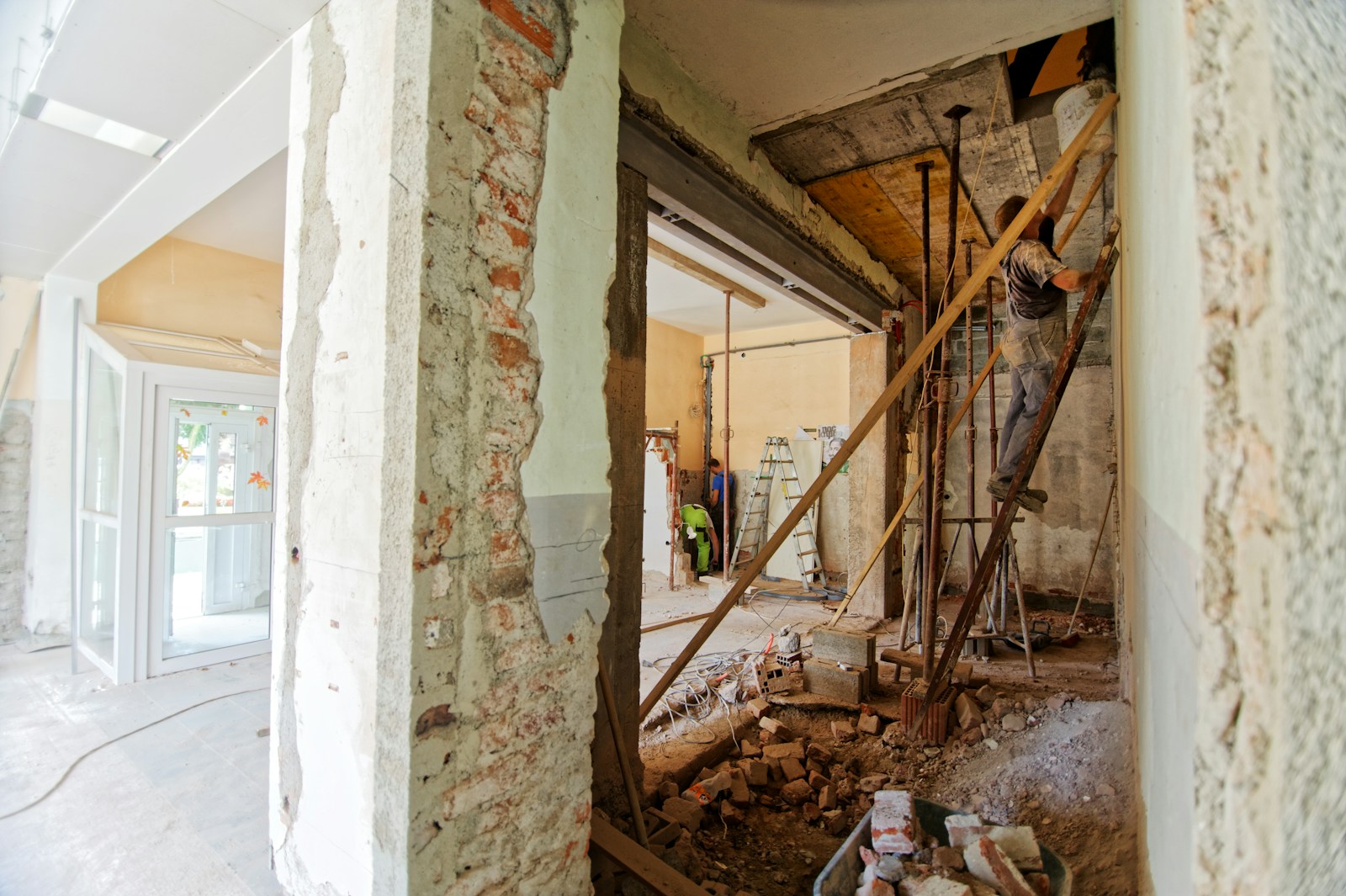
A fix and flip loan or a ground-up construction loan has two parts. One part funds the purchase, or the lot, at closing. The other part is the construction budget, and it is set aside as a holdback. You get it in pieces, called draws, as each stage of the work is finished and verified.
Investors who plan for this move fast. Investors who do not find out in week three that the loan will not pay for the framing until the framing is done. Here is how the money actually moves, and how to build a schedule that works with it.
The short version
Closing funds the purchase. The budget waits in a holdback. Each draw pays for work that is complete and inspected. Draws reimburse finished work. They do not prepay the next phase.
How the money moves, step by step
- The budget is agreed before closing. Your scope of work lists every line item and its cost: demo, framing, plumbing, electrical, roof, kitchen, baths, flooring, paint. That budget becomes the holdback.
- Closing funds the purchase. The initial advance pays for the property or the lot. The holdback is not disbursed. It sits ready to draw.
- You do the work and pay for it. Your contractor completes a phase. You or the contractor carry that cost for now.
- You request a draw. The request lists the line items that are complete, with photos.
- The work is inspected. An inspector confirms what is done, by site visit or photo review.
- The funds are released. The lender pays for the verified work, and the next phase starts on a clean ledger.
The part that catches people: you carry the first phase
Because draws pay for completed work, someone has to front the cost of each phase until its draw is funded. On a good job the draws refill the account as fast as the work drains it. But the first phase always comes out of pocket, and so does any phase where the draw runs late.
Plan for it. Keep enough cash on hand to carry your largest single phase, not just the first one. A contractor who has to stop and wait for money costs you days, and days are the most expensive line on a short-term loan.
Building a draw schedule
A draw schedule groups the budget into phases in the order the work actually happens, and sizes each draw to the work in it. Most residential jobs fall into five phases:
| Phase | What it covers | What the inspector looks for |
|---|---|---|
| Site prep and demo | Permits, dumpsters, tear-out, abatement, grading | The space is cleared and ready to build |
| Structure | Foundation repair, framing, roof, windows, exterior doors | The building is framed and dried in |
| Systems rough-in | Plumbing, electrical, HVAC, before the walls close | Rough-ins complete and, where required, signed off |
| Finishes | Drywall, cabinets, counters, tile, flooring, paint, fixtures | The rooms look finished |
| Final completion | Punch list, appliances, landscaping, final inspection | The house is ready to list or rent |
You can split the budget evenly across draws, or weight each draw to the phases it covers. Phase-weighted is usually closer to how the money is really spent, because finishes and systems cost far more than demo.
Build yours in a few minutes. The free Draw Schedule Builder takes your line items, sorts them into phases in construction order, and lays out the draws, even split or phase-weighted. Start with the Budget Builder if you do not have a line-item budget yet.
One worked example
Every figure below is a hypothetical illustration, not a quote or a promise of terms. It is here to show the mechanics.
An investor is renovating a single-family house with a $120,000 budget and plans four draws, weighted to the work:
| Draw | Phases covered | Amount | Share of budget |
|---|---|---|---|
| 1 | Site prep and demo ($12,000), structure ($30,000) | $42,000 | 35% |
| 2 | Systems rough-in | $33,000 | 27.5% |
| 3 | Finishes | $36,000 | 30% |
| 4 | Final completion | $9,000 | 7.5% |
| Total | $120,000 | 100% |
Read the schedule from the investor's side. Draw 1 is not funded until demo and framing are both done, so the investor carries up to $42,000 before the first dollar of the holdback comes back. That is the number to have in the bank on day one, not the $9,000 of the smallest draw.
If $42,000 is too much to carry, split Draw 1 in two: demo on its own, then structure. That adds one more inspection, and it cuts the cash the investor has to front to $30,000.
Fewer draws or more?
Each draw carries an inspection fee and a turnaround. Fewer, larger draws cost less in fees and paperwork. More, smaller draws mean less of your own cash tied up at any moment. The right count is usually three to six on a renovation, and more on a ground-up build.
A simple rule: one draw per phase that costs real money, and never a draw so large that you cannot carry it.
Interest on money you have not drawn
Loans handle the holdback two ways. Some charge interest only on the money actually disbursed, so the undrawn budget costs nothing until you draw it. Others charge interest on the full loan amount from the day of closing, drawn or not. On a long renovation the difference adds up. Ask which one a loan uses before you compare two offers side by side.
Five things that slow a draw down
- No permit. The first hard-cost draw waits for the building permit. Pull permits early.
- Work that is almost done. Ninety percent of the kitchen is not a finished line item. Request the draw when the line items in it are complete.
- Line items that do not match the budget. If the request uses different names or amounts than the approved scope of work, it stops for questions. Use the same line items, every time.
- Unapproved changes. Moved the bathroom, upgraded the roof? Get the change to the budget approved before you draw against it.
- Weak photos. Blurry, unlabeled photos send the inspector back out. Shoot each line item clearly, wide and close, and label it.
Ground-up builds: the same idea, more stages
On new construction, the initial advance is against the lot, and the whole build runs on the holdback. The plans and the budget are reviewed before the first draw, so the schedule and the line items are agreed before money moves. The stages are longer and there are more of them: foundation, framing, dry-in, rough-ins, insulation and drywall, finishes, and final. The same rules apply. Draw against finished stages, keep the line items consistent, and keep cash for the largest stage.
How draws work with us
On our fix and flip and ground-up construction loans, the construction budget is held back at closing and released in draws as completed work is inspected. You request a draw against the line items on your scope of work that are complete, with photos. Permits come before the first hard-cost draw. Each draw is a checkpoint: work verified, money released, next phase funded. For what happens when the work is finished, see After the Bridge: Refinance, Sale, or Extension, and for valuing the finished house, How to Calculate ARV.
Questions investors ask about draws
What is a construction draw?
A construction draw is a release of loan money for work that has been completed. On a fix and flip or ground-up construction loan, the renovation or build budget is held back at closing and paid out in draws as each stage of the work is finished and verified.
Do construction draws pay for work in advance?
Usually not. Draws reimburse work that is already done and inspected. The investor or the contractor carries the cost of each phase until the draw for it is funded, so plan cash for at least the first phase.
How many draws should a renovation have?
Most renovations run on three to six draws. Each draw carries an inspection fee and a turnaround, so fewer, larger draws cost less, but every draw you skip is a phase you carry with your own cash for longer. Size the schedule to the phases of the work.
What happens at a draw inspection?
An inspector confirms that the line items in the draw request are complete, usually with a site visit or a photo review. The lender then releases the funds for the work that was verified. Work that is started but not finished is generally not paid until it is done.
Do I pay interest on money I have not drawn yet?
It depends on the loan. Some loans charge interest only on the money actually disbursed, so the undrawn holdback costs nothing until you draw it. Others charge interest on the full loan amount from closing. Ask which one your loan uses before you compare offers.
Do I need a permit before the first draw?
For work that requires one, yes. The first hard-cost draw generally waits for the building permit, so pull permits early and do not let them hold up the start of the job.
Have a renovation or a build in mind? Enter the purchase price, the budget and your after-repair value, and see the program and the maximum loan in a few minutes. Price a Deal. Fix and flip and ground-up construction loans are available in 40 states; see where we lend.
Keep reading
- How to Calculate ARV: After Repair Value, Step by Step
- After the Bridge: Refinance, Sale, or Extension
- The BRRRR Exit: Timing the Refinance Out of a Bridge Loan
- The Private Money Platform: What Changed and How to Use It
This article is provided for general informational purposes only. It is not a commitment to lend, an appraisal, or investment, legal, tax, or financial advice. All figures, budgets, and schedules above are hypothetical illustrations, not a loan quote, rate representation, or promise of available terms. Draw procedures, inspections, fees, and holdbacks vary by loan. Loans are for business purposes only. Actual loan terms, pricing, and transaction results vary and are subject to underwriting, appraisal, documentation, and applicable law.